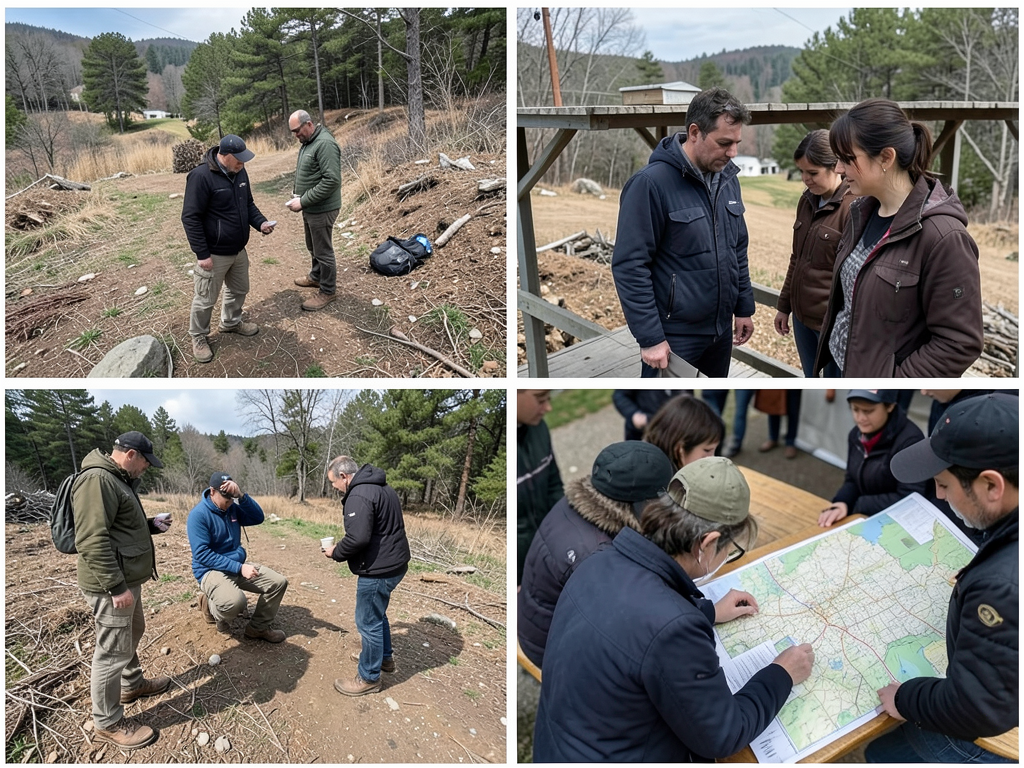
A vantage point is part of the evidence environment. Change the position from which something is observed—physical, temporal, informational, disciplinary, cultural, economic, psychological, technological—and the apparent reality can change even when the underlying reality has not.
Every observation is made from somewhere. The observer occupies a position, possesses certain information, lacks other information, uses particular instruments and methods, operates at a particular moment in time, and sees only some portion of the whole.
Move the observer. Change the time. Change the available information. Change the instrument. Change the discipline examining the problem. Change the scale. Change what is included—or excluded. Something previously invisible may become visible.
The underlying reality may not have changed at all. The vantage point changed.
A witness standing ten feet away sees one portion of an event.
A camera facing another direction records something the witness may never have seen.
An engineer examining the mechanism afterward can discover something neither observer could see.
A historian twenty years later may possess records and context unavailable when the event occurred.
Instead of immediately asking Which observer is right?, APDD can ask: What could each observer see from that position? What could each observer not see? Where do their observations agree? Where do they differ? Why do they differ? What relationship exists between those differences? What becomes visible when the vantage points are combined?
A disagreement may represent error. But it may also represent position. Discovering which one it represents is part of the investigation.
Accuracy from one position is not the same thing as completeness of the whole. APDD must investigate not only the evidence, but the position from which the evidence became evidence.
Location, direction, distance, scale and physical access.
Before, during, immediately after and much later.
What changes when additional evidence becomes available?
What does another field notice that the first may not?
Which interpretations or assumptions depend upon cultural position?
What becomes visible through incentives, costs, ownership, scarcity and financial relationships?
How might perception, expectation, memory, motivation or cognitive limitation affect observation?
What becomes detectable through different instruments, measurements, computation or technology?
A different position can introduce its own distortions, assumptions, incentives, blind spots, measurement problems or missing information. APDD therefore should never treat an alternative vantage point as superior merely because it is different. It must earn its contribution.
The purpose is not to manufacture endless perspectives. The purpose is to increase justified understanding of the whole.
Where are we observing from?
What becomes visible from here?
What can this position not establish?
What happens from another position?
How do the observations connect, differ, reinforce or challenge?
Does combined evidence require us to modify what we believed?
This question prevents a partial observation from quietly becoming a claim about the whole. It requires APDD to distinguish what was observed from what was inferred from what was concluded—and then requires the conclusion to survive examination from elsewhere.
Sometimes the most important discovery in an investigation is not a new fact. It is discovering that where we were standing prevented us from seeing a fact that was already there.