DEFINE THE JOB
Clarify the task, problem, question, outcome, user and operating conditions. A useful specification separates what is required from what is merely assumed or convenient.
APDD APPLICATIONS SHOWROOM SUITE
APDD develops purpose-built applications around real human and operational needs. A screen, dashboard, form, search box, reader, control panel, visual environment, or interactive tool is only the visible surface. The deeper question is whether the application helps someone accomplish a defined job under real conditions—and whether its claims survive examination.
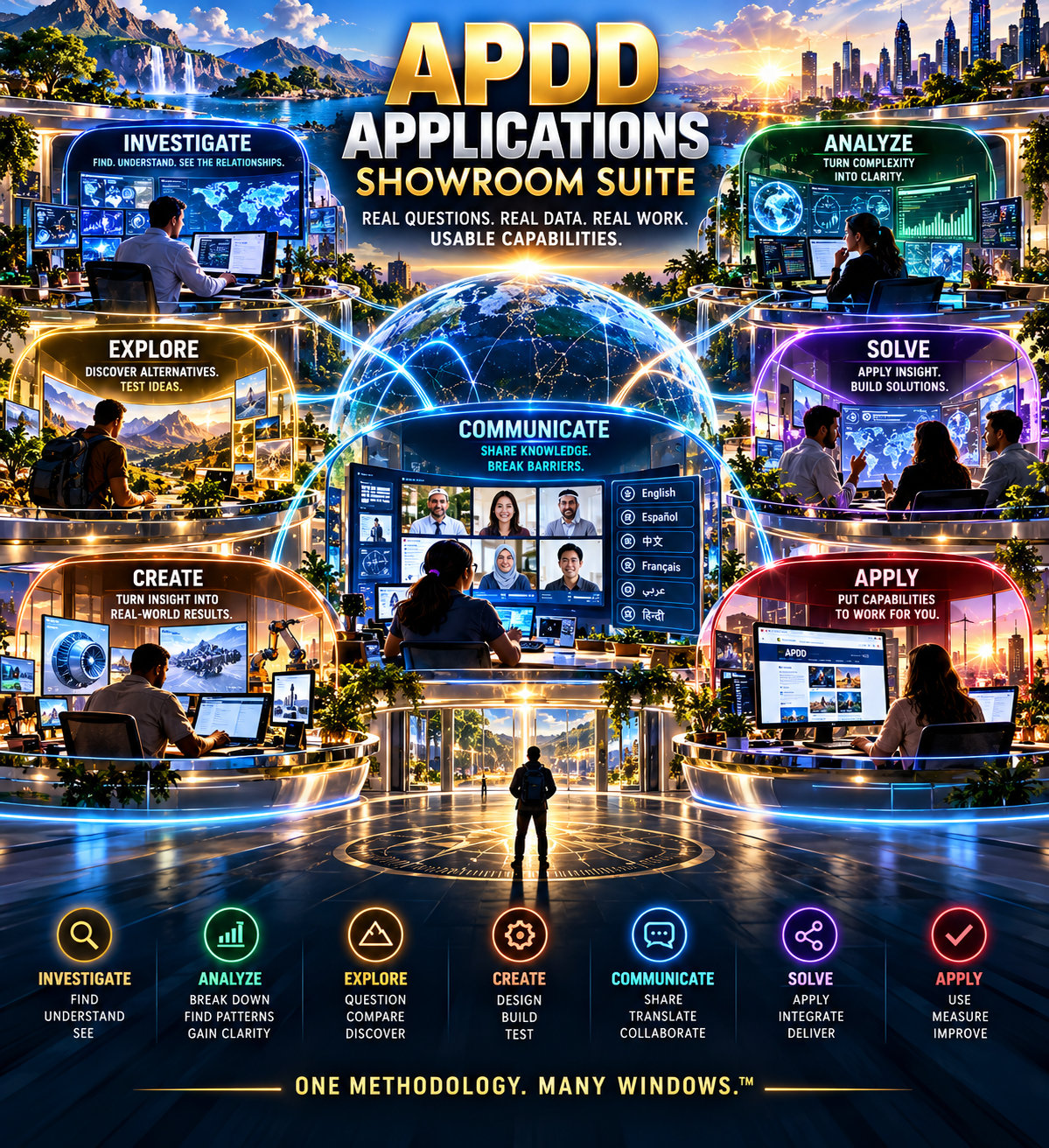
That is why APDD treats application development as applied problem solving. The subject may be investigation, learning, communication, workflow, knowledge organization, decision support, media, translation, operational control, or another useful function. The form can change. The discipline does not.
WHAT DO I GET?EXAMINE ATLASWHAT IS AN APDD APPLICATION?
An APDD application begins with the job rather than a fashionable feature list. What should a person, team, organization, affiliate, customer, or operator be able to accomplish? What information is required? Which relationships matter? What decisions are involved? What must remain under human control? What could fail, and what would a useful result actually look like?
Those questions turn a vague software idea into something that can be investigated and tested. They also create a boundary between what an application is intended to do and what it has not earned the right to claim.
For a visitor, that means the value of an application is not measured by how complicated it looks. A small, focused tool can be more useful than a sprawling system if it solves the right problem clearly. A sophisticated capability can be appropriate when the job genuinely requires deeper analysis, multiple information sources, comparison, verification, coordination, or continuing observation.
HOW DOES APDD APPROACH THE BUILD?
Application Development is not the APDD Methodology itself. It is one way the Methodology becomes usable capability. APDD investigates before committing to an answer, distinguishes requirements from assumptions, examines relationships and constraints, builds to defined boundaries, tests what was built, observes what happens, and corrects failures when reality earns a correction.
The objective is not to expose private development machinery. It is to make the public standard understandable: the application should have a purpose, its operating limits should be visible, its behavior should be testable, and the result should be described according to what has actually been demonstrated.
EXPLORE THE METHODOLOGYFROM NEED TO WORKING CAPABILITY
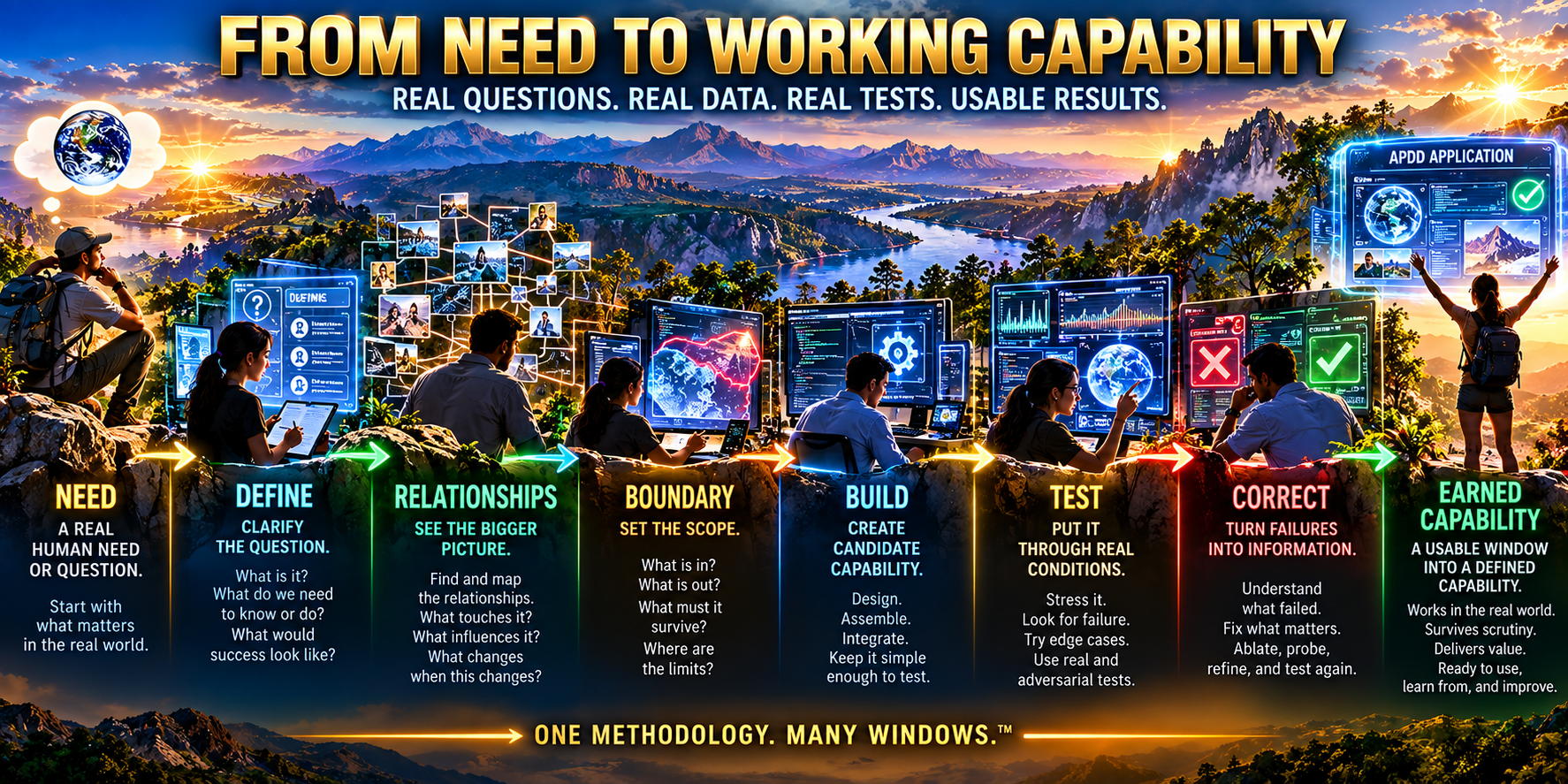
Clarify the task, problem, question, outcome, user and operating conditions. A useful specification separates what is required from what is merely assumed or convenient.
Examine users, information, evidence, decisions, dependencies, workflows, permissions, inputs, outputs and consequences. Many failures hide between components rather than inside a single component.
Select the functions and architecture the job actually requires. More capability is not automatically better, and capability does not automatically confer authority.
Check behavior, failure handling, usability, accessibility, security, performance and whether the application actually performs the defined job. A demonstration and a production-ready system are not the same state.
A working interface is not proof of a working application. Observed errors, contradictions, limitations, unexpected use and measurable results become evidence for further examination and correction.
Prototype, demonstration, controlled operation and production readiness carry different levels of evidence. APDD keeps those distinctions visible rather than converting intention into a success claim.
WHAT CAN THESE APPLICATIONS DO?
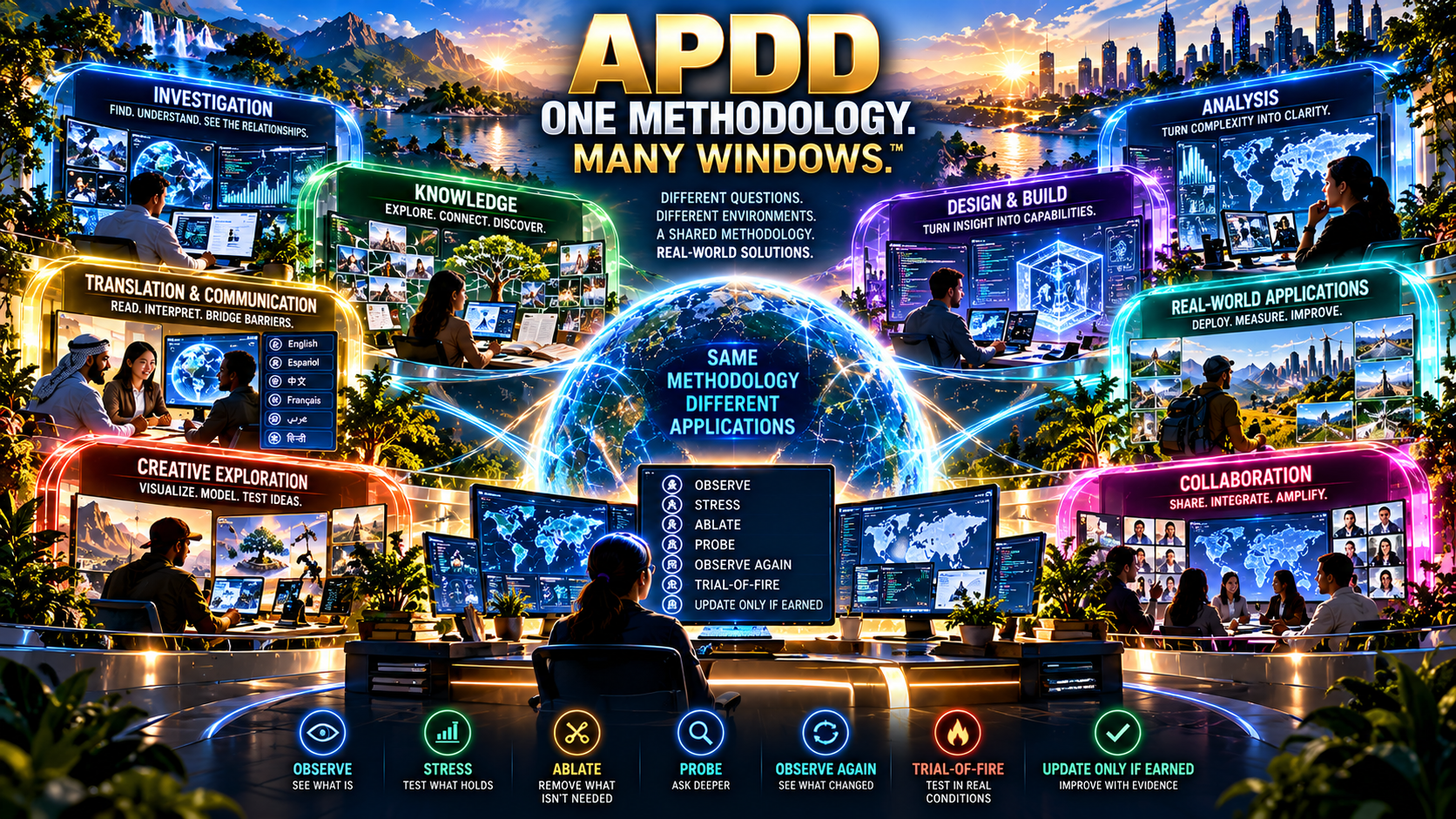
Applications can take many forms because useful work takes many forms. A research or investigative application may help gather questions, compare claims, examine evidence, discover relationships, identify contradictions and surface uncertainty. A learning application may organize material, explain relationships, invite questions and help a person test their own understanding. A workflow application may coordinate information, steps, permissions and follow-up so that work does not disappear between people or systems.
A communication capability may help present, read, interpret or translate information for different audiences. A knowledge tool may help organize sources, findings, records and context so that material can be retrieved and compared. A decision-support application may help make alternatives, consequences, assumptions and evidence easier to examine while leaving the decision with the human being responsible for it.
Other applications may support websites, media, demonstrations, operational controls, monitoring, reporting or specialized tasks. The category is less important than the job. APDD's interest is in turning a real need into a capability whose purpose can be stated, whose behavior can be examined, and whose limitations can be understood.
HOW IS THIS DIFFERENT FROM ADDING FEATURES?
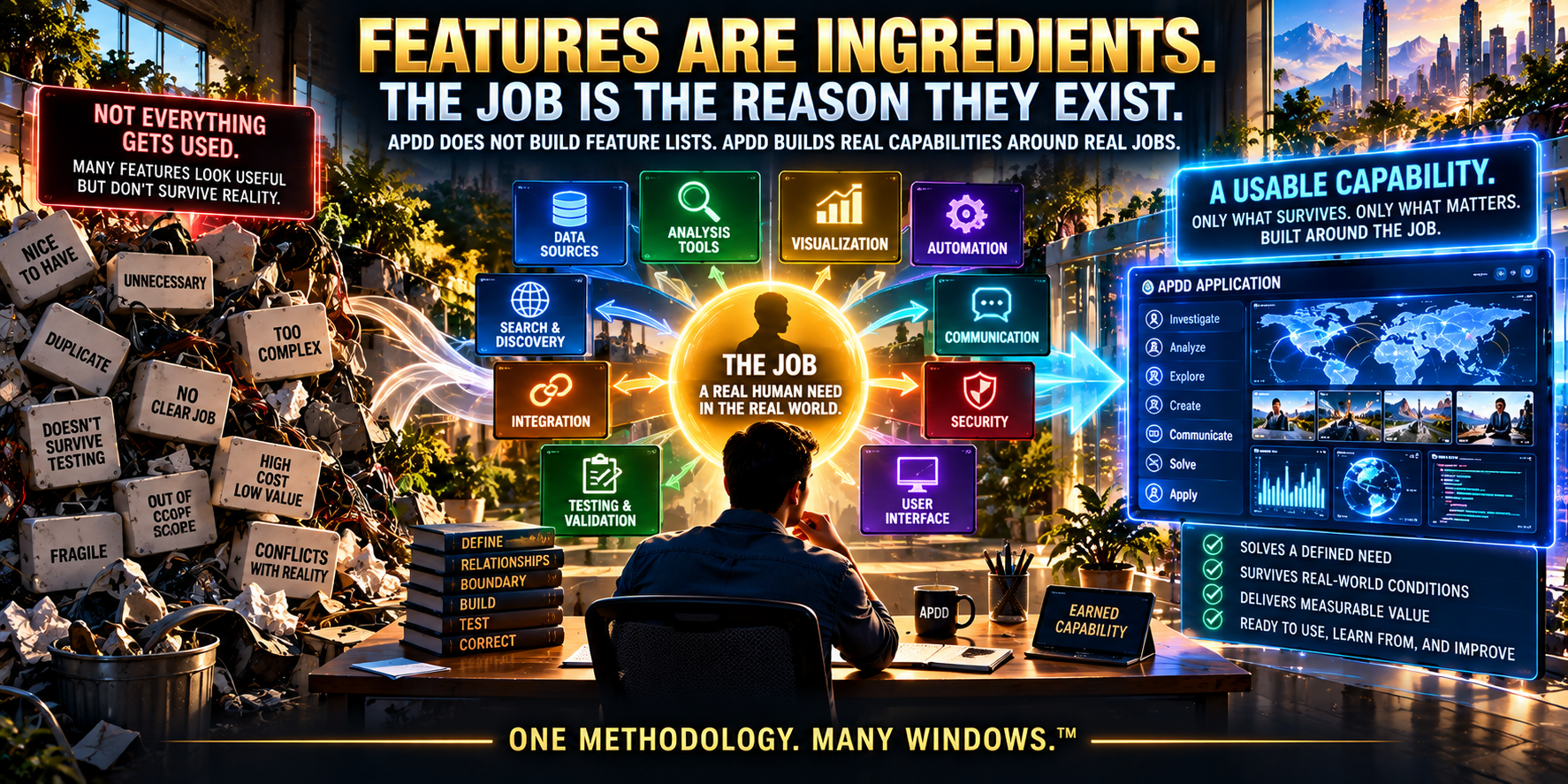
A search field, AI model, database, dashboard, automation, reader, translator, visualization, alert, report or media component can be useful. None of those components proves that an application solves the problem it was built to address. APDD therefore asks what relationship each feature has to the intended outcome.
If a function does not contribute to the defined job, it should have to justify its presence. If a simpler approach performs the job more reliably, complexity is not a virtue. If a capability creates new risks, dependencies or permissions, those conditions belong in the examination too.
This is also why APDD does not treat novelty as proof. New technology can create new possibilities, but usefulness still has to be observed. The important questions remain practical: Does it work? Under what conditions? For whom? With what evidence? Where does it fail? What happens next?
WHAT HAPPENS WHEN AN APPLICATION FAILS?
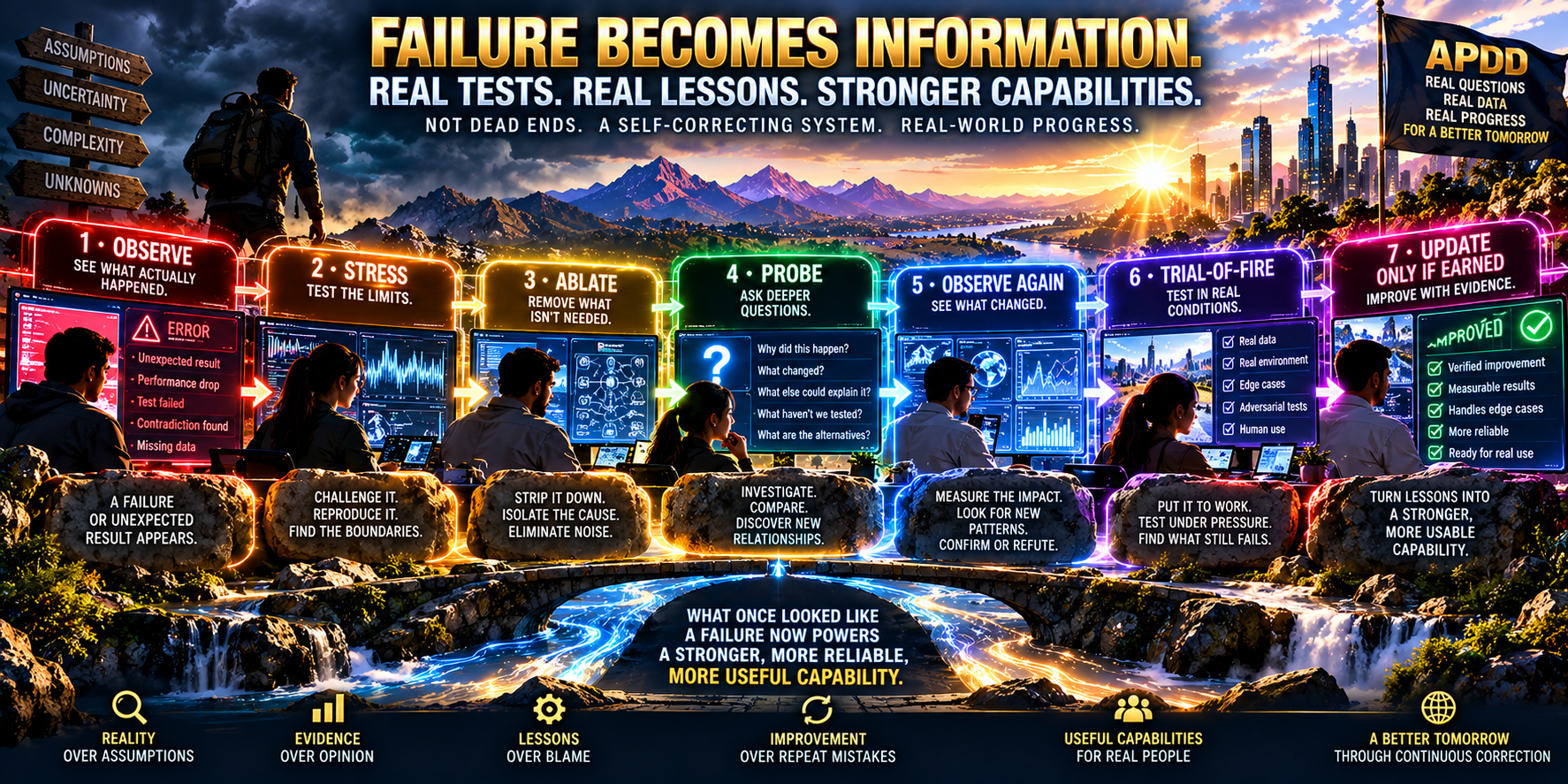
Software can fail visibly through an error, broken link or unavailable service. It can also fail more quietly: a result may be technically correct but confusing, a workflow may work in testing but break under real use, an automated suggestion may be accepted too readily, or an interface may make an important relationship difficult to see.
APDD's response is not to pretend those failures never happened. The useful response is to observe them, determine what actually failed, distinguish symptoms from causes, test possible corrections and update only when the evidence supports the change.
That principle also protects working parts of a system. APDD does not want to “fix” components that have not failed simply because a different design is possible. Correction should be deliberate, bounded and connected to evidence.
HOW DO ATLAS AND CRITICAL THINKING FIT?
ATLAS is APDD's public investigative research and analysis doorway. It demonstrates a central application idea: a tool can help a person question, compare, investigate, examine evidence, consider alternatives and continue beyond the first answer. The question belongs to the user, and the user's judgment remains their own.
The Critical Thinking page extends that question. If AI or another digital capability makes work easier, what happens to the person's ability to understand, challenge, learn and reason independently? APDD treats that as something to investigate rather than something to assume.
That human-first boundary applies beyond ATLAS. Applications should increase useful capability without quietly converting assistance into authority. Where a person remains responsible for a choice, the application should support examination rather than disguise the fact that a human decision still exists.
WHAT DO I GET?
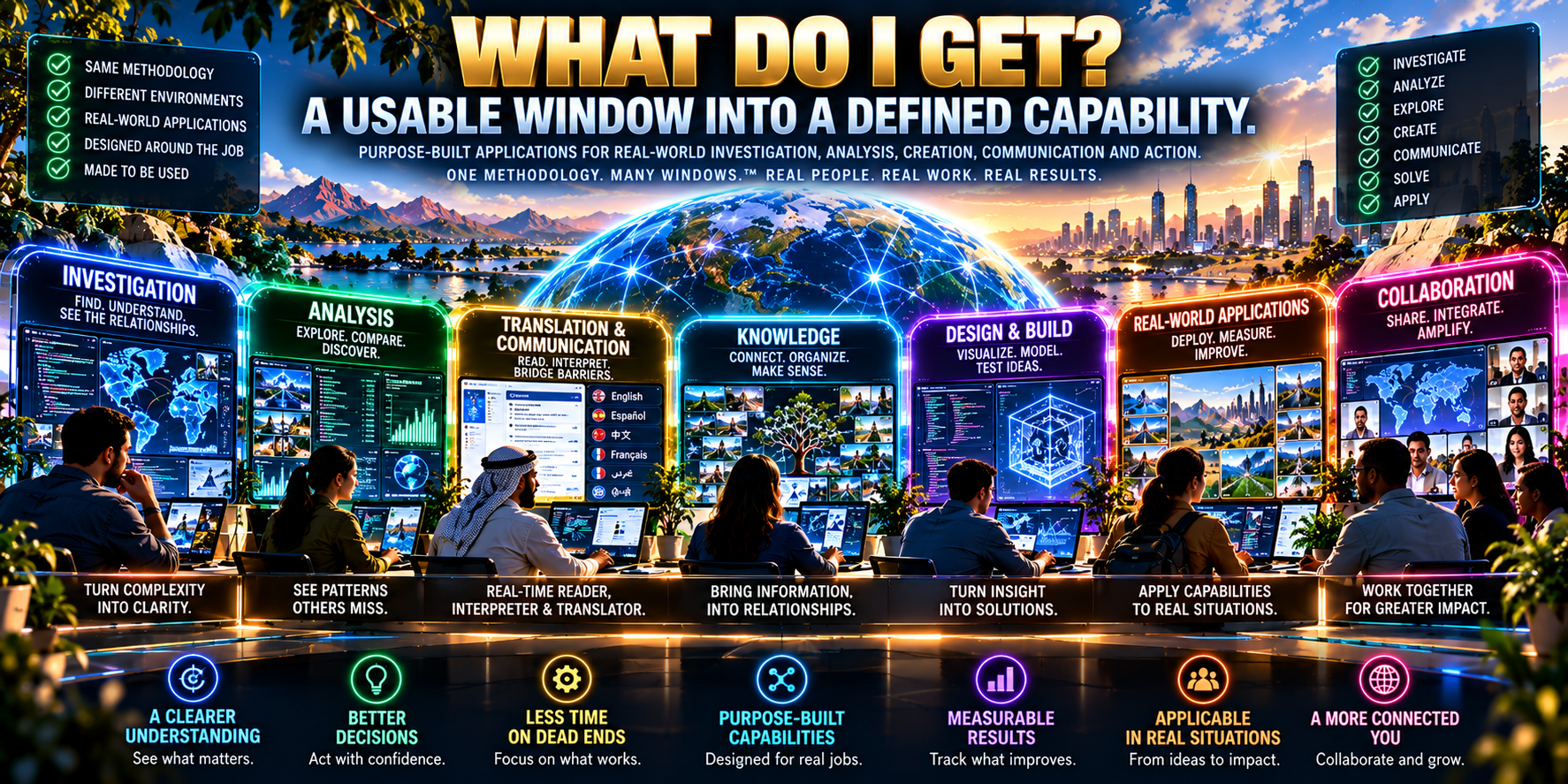
The visible result depends on the job. It may be an interactive application, investigative interface, workflow, website capability, reader, communication tool, organized knowledge environment, dashboard, control surface, demonstration or another purpose-built digital experience.
What should remain consistent is the relationship between purpose and result. You should be able to understand what the application is for, what it helps you do, what information or interaction it requires, what it returns, where its boundaries are, and what status its claims have earned.
For work still in development, APDD should say so. For a prototype, demonstration or controlled release, the label should match the evidence. Production readiness is something to establish, not something to imply because a screen looks finished.
Don't just show capability. Make its purpose, boundary and result understandable.
WHERE DO I GO NEXT?
If you want to understand the discipline behind the applications, examine the Methodology. If you want to experience APDD's public investigative capability, enter ATLAS. If you want to examine how APDD thinks about AI and independent human reasoning, continue to Critical Thinking. If you want a broader view of existing public capabilities, explore the capability pages below.
ENTER ATLASCRITICAL THINKINGCURRENT CAPABILITIESHOW APDD ASKS TO BE TESTEDAPDD public capabilities may include work at different stages of development. Descriptions should remain proportional to demonstrated evidence and operating status.
Page reviewed: September 30, 2026
BACK TO TOP ↑